
The Areopagus, Athens
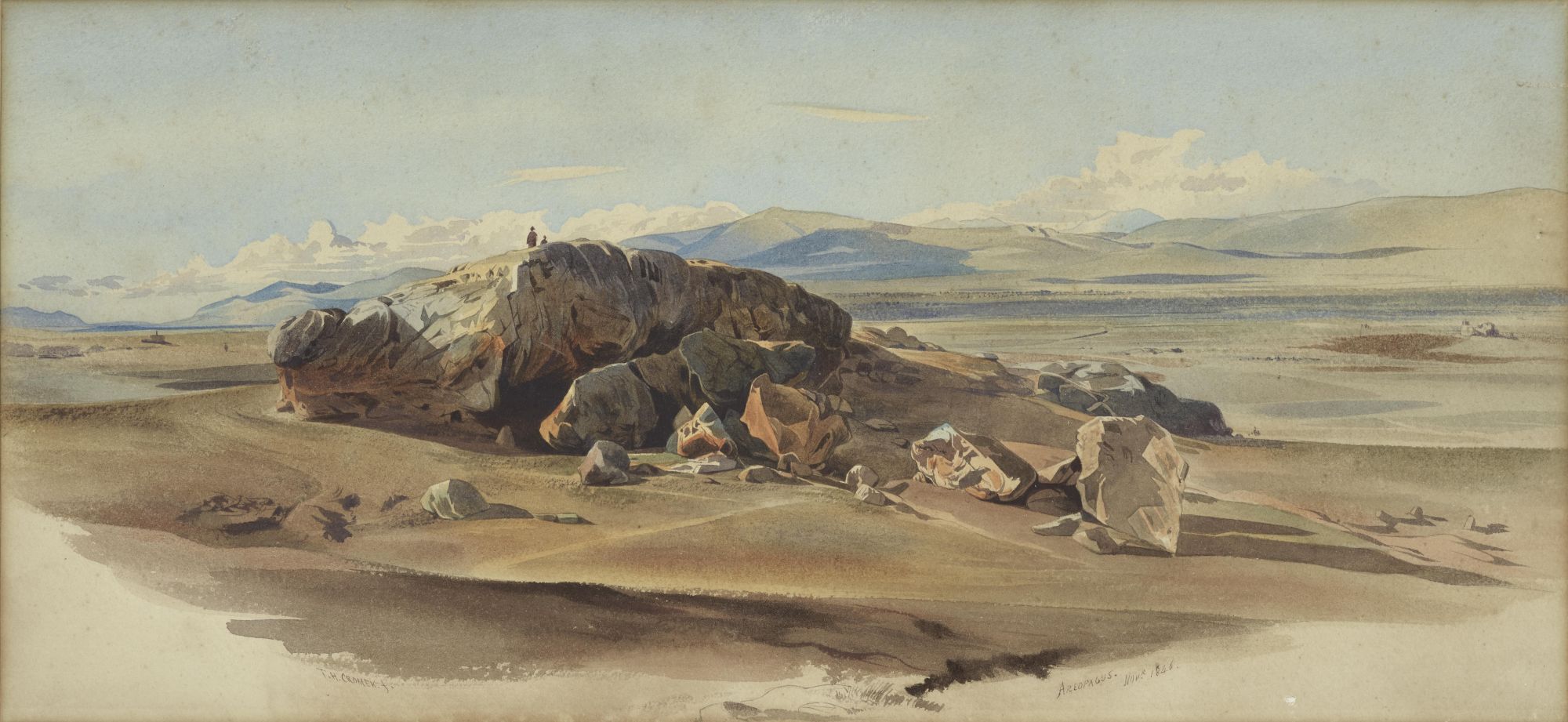
The Areopagus, Athens
The Areopagus, AthensSigned lower left: T.H. CROMEK f. and inscribed lower right: AREOPAGUS/NOV.R 1846.Watercolour over pencil22 by 48 cm., 8 ½ by 18 ¾ in.Provenance:With Spink, London (no. K3 7047)Cromek was born in London, the son of engraver, and was apprenticed to a portrait painter in Wakefield, Yorkshire. He soon turned to landscape painting and lived and worked mainly in Rome (see no.52), from 1831 to 1849. He became well known and built up a successful teaching practice, numbering several notable visitors amongst his students, including Edward Lear in November 1837. He was forced to return to England in 1849 by Garibaldi's threatened attack on Rome. Cromek visited Athens twice, in the summer of 1834 and again in 1845 when he spent two months drawing its principal monuments. 'I was delighted by everything I saw at Athens: the colour of the buildings being much richer, and less dark than that of the ruins in Rome. As specimens of architecture, they are universally considered perfect' (Thomas Hartley Cromek, Reminiscences at Home and Abroad 1812-1855, August 23rd, 1834). The Areopagus, or `Hill of Ares', is a rocky hill to the north-west of the Acropolis, which was the location of a supreme court that met there from the 7th or 8th century BC.)
Thomas Hartley Cromek (1809-1873)
The Areopagus, Athens
Signed lower left: T.H. CROMEK f. and inscribed lower right: AREOPAGUS/NOV.R 1846.
Watercolour over pencil
22 by 48 cm., 8 ½ by 18 ¾ in.
Provenance:
With Spink, London (no. K3 7047)
Cromek was born in London, the son of engraver, and was apprenticed to a portrait painter in Wakefield, Yorkshire. He soon turned to landscape painting and lived and worked mainly in Rome (see no.52), from 1831 to 1849. He became well known and built up a successful teaching practice, numbering several notable visitors amongst his students, including Edward Lear in November 1837. He was forced to return to England in 1849 by Garibaldi's threatened attack on Rome.
Cromek visited Athens twice, in the summer of 1834 and again in 1845 when he spent two months drawing its principal monuments. 'I was delighted by everything I saw at Athens: the colour of the buildings being much richer, and less dark than that of the ruins in Rome. As specimens of architecture, they are universally considered perfect' (Thomas Hartley Cromek, Reminiscences at Home and Abroad 1812-1855, August 23rd, 1834). The Areopagus, or `Hill of Ares', is a rocky hill to the north-west of the Acropolis, which was the location of a supreme court that met there from the 7th or 8th century BC.