
St Agatha's Abbey, Easby, Yorkshire
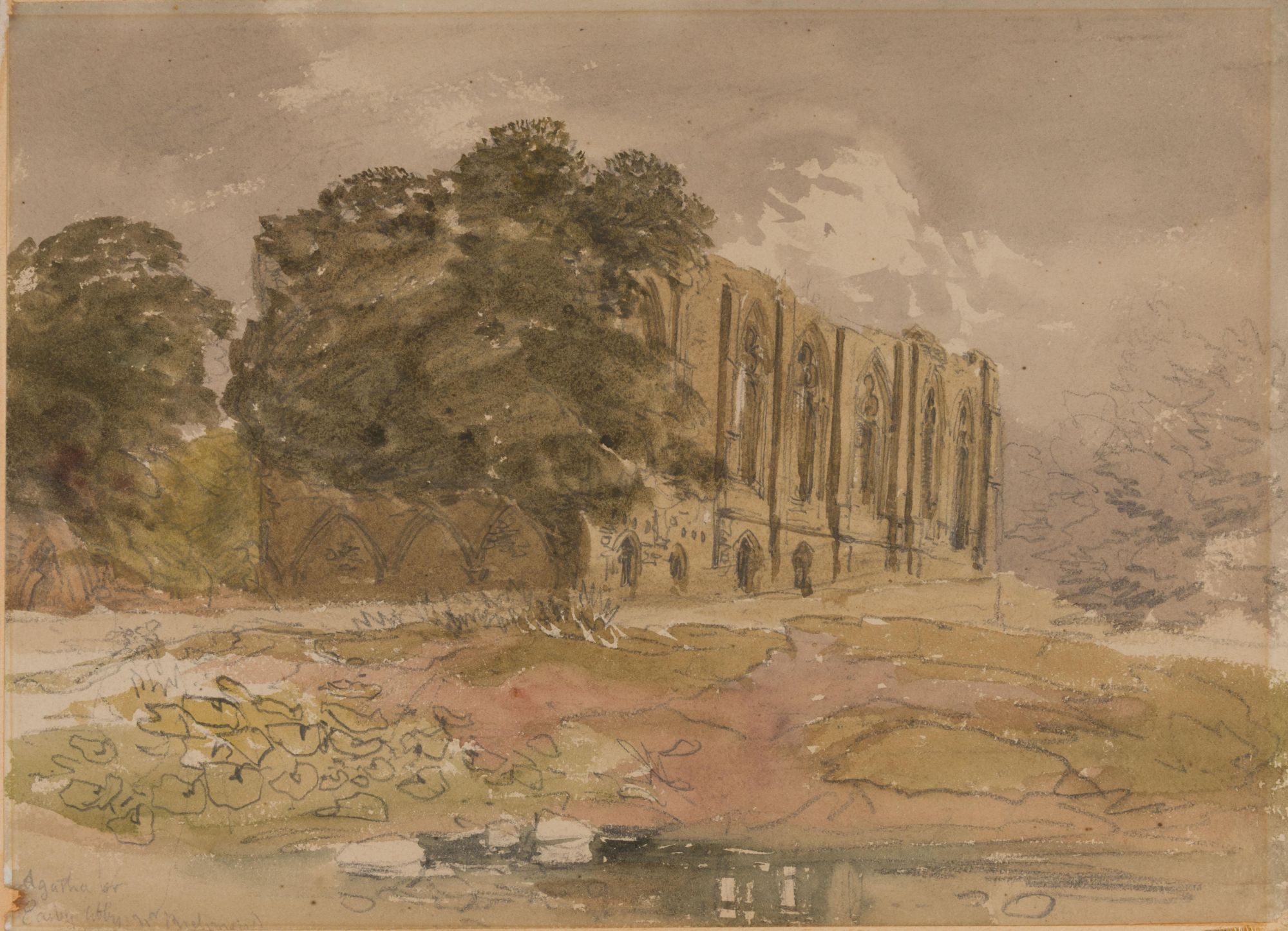
St Agatha's Abbey, Easby, Yorkshire
St Agatha's Abbey, Easby, YorkshireInscribed lower left: Agatha or/Easby abbey n.r RichmondWatercolour and pencil25.6 by 35 cm., 10 by 13 ¾ in.The abbey of St Agatha, Easby was founded by the Constable of Richmond Castle in 1152. The abbey formed part of the order of the Premonstratensians or White Canons, so named because of their white habits. The order was founded, not as a contemplative, enclosed order, but to help local communities, by preaching, teaching or through charitable work. Easby, like many of the northern monasteries suffered from Scottish raids. Following the dissolution of the monasteries, the abbey was abandoned and allowed to fall into ruin. During the 18th and early 19th centuries the grandeur and drama of the ruins, with the remote landscape surrounding the abbey, made it a key spot for antiquarians, poets and artists seeking inspiration. Several notable artists including Cotman, who illustrated the abbey as plate 20, in his first series of Etchings by John Sell Cotman, as well as Callow and Turner all depicted the picturesque subject.The rapid pencil lines demonstrate that this work was executed at least partially on the spot, with the artist capturing the foliage, the shape of the landscape and the elegant ruins surrounded by trees. The watercolours may either have been applied whilst Cox was working outside, or as was more usual, once the artist had returned from his day's sketching. With its confident handling of both watercolour and pencil, this sketch dates from the 1840s.)
David Cox, O.W.S. (1783-1859)
St Agatha's Abbey, Easby, Yorkshire
Inscribed lower left: Agatha or/Easby abbey n.r Richmond
Watercolour and pencil
25.6 by 35 cm., 10 by 13 ¾ in.
The abbey of St Agatha, Easby was founded by the Constable of Richmond Castle in 1152. The abbey formed part of the order of the Premonstratensians or White Canons, so named because of their white habits. The order was founded, not as a contemplative, enclosed order, but to help local communities, by preaching, teaching or through charitable work.
Easby, like many of the northern monasteries suffered from Scottish raids. Following the dissolution of the monasteries, the abbey was abandoned and allowed to fall into ruin. During the 18th and early 19th centuries the grandeur and drama of the ruins, with the remote landscape surrounding the abbey, made it a key spot for antiquarians, poets and artists seeking inspiration. Several notable artists including Cotman, who illustrated the abbey as plate 20, in his first series of Etchings by John Sell Cotman, as well as Callow and Turner all depicted the picturesque subject.
The rapid pencil lines demonstrate that this work was executed at least partially on the spot, with the artist capturing the foliage, the shape of the landscape and the elegant ruins surrounded by trees. The watercolours may either have been applied whilst Cox was working outside, or as was more usual, once the artist had returned from his day's sketching. With its confident handling of both watercolour and pencil, this sketch dates from the 1840s.