
Heidelberg, Germany
Heidelberg, Germany
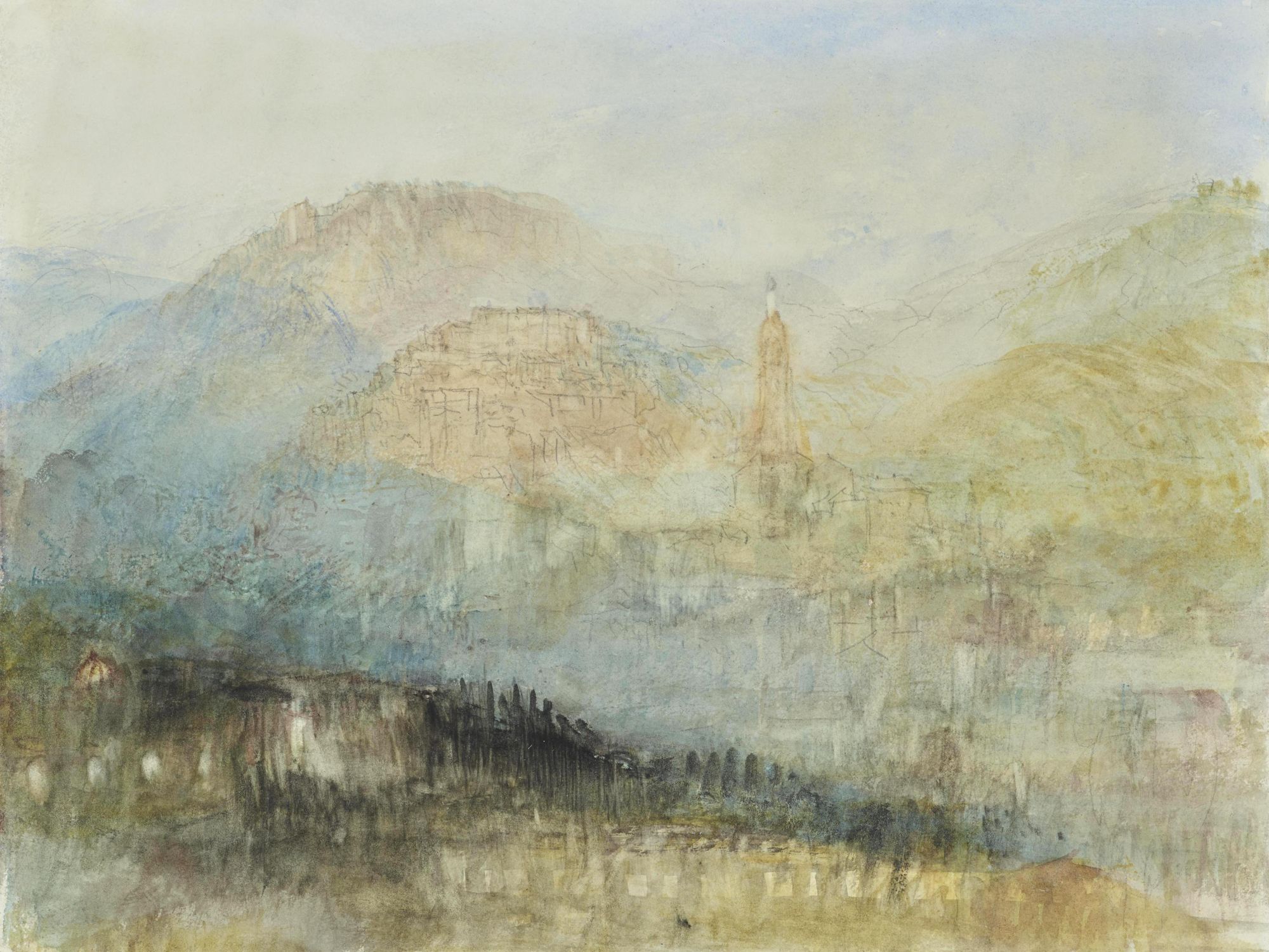
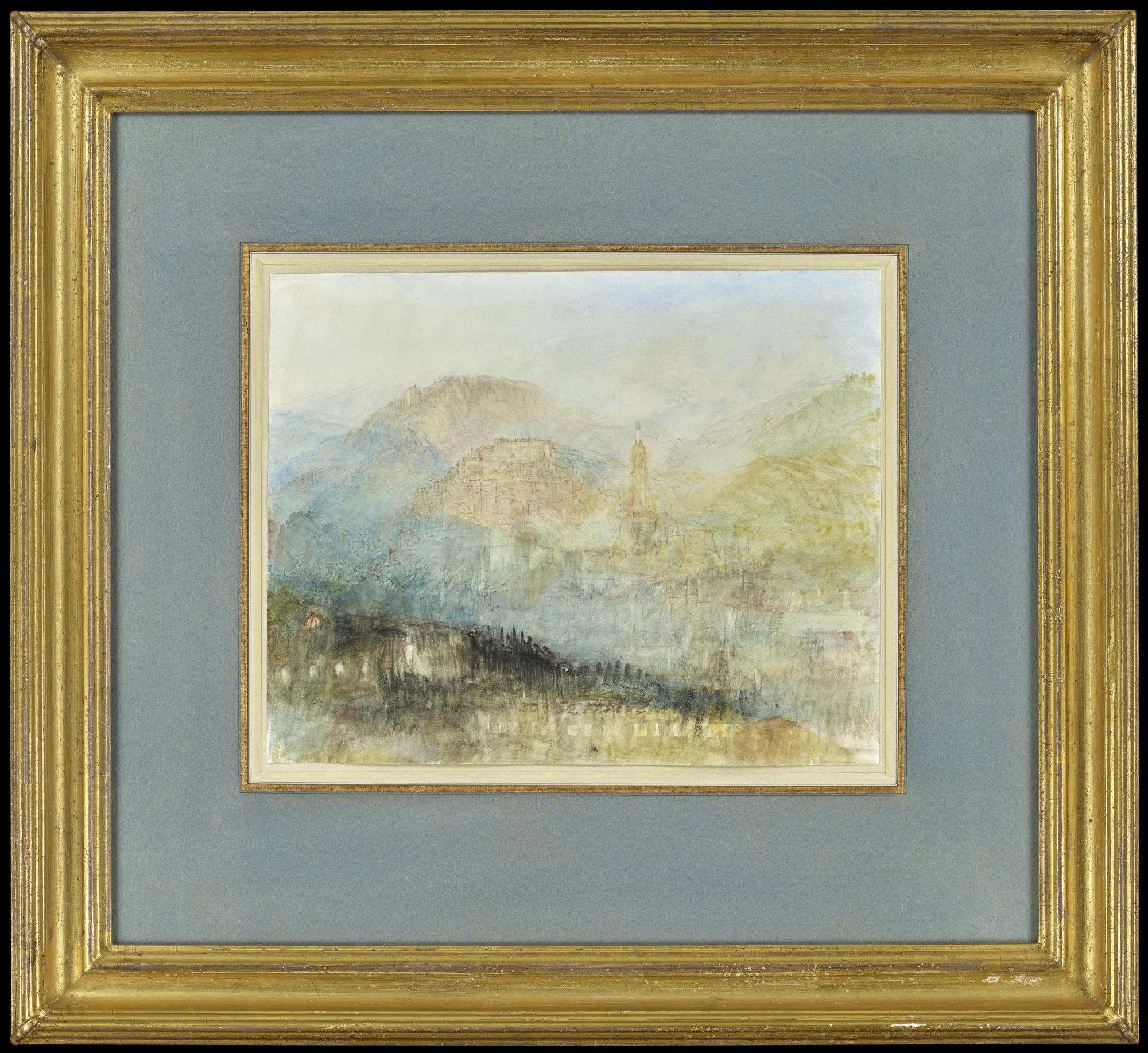
Heidelberg, GermanyWatercolour over pencil heightened with touches of bodycolour and stopping out23.3 by 29 cm., 9 by 11 ½ in.Provenance:Alexander Joseph Finberg (1866-1939);Howard Bliss (1894-1977);With Spink & Sons, London, where bought in 1950 as `Bellinzona';By descent to the present ownerLiterature:Georg W. Költzsch, William Turner - Licht und Farb, exhibition catalogue, 2001, p.354, no.171, ill.Exhibited:Essen, Folkwang, William Turner - Licht und Farb, 15th September 2001 to 6th January 2002, no.171;Zurich, Kunsthaus, William Turner - Licht und Farb, 1st February to 26th May 2002, no.171This important late watercolour has been in the same private collection since 1950. It has only been exhibited once since then, in 2001, when it was re-identified as a view of Heidelberg. It depicts the classic view of the city looking south across the river Neckar from the Neuenheim side as painted by many other nineteenth century artists. The spire of the Heiliggeistkirche or church of the Holy Spirit is prominent in the centre with Heidelberg castle on the hill behind to the left. Turner visited Heidelberg at least four times, the first being in 1833 when he made around fifty pencil sketches of the city in the Heidelberg up to Salzburg sketchbook (TB CCXCVII). This watercolour is likely to date from 1841-2 and may be based on sketches of Heidelberg in the Berne, Heidelberg and Rhine sketchbook (TB CCCXXVI) of 1841 although he also passed through the city in 1840 and 1844. Turner visited Germany and travelled down the Rhine every year from 1839 to 1844 with Switzerland usually his final destination. An unusually large colour study of Heidelberg taken from further along the river Neckar, in the Turner Bequest, is dated 10th March 1841 (TB CCCLXV 34).Turner drew watercolours of Heidelberg from this viewpoint on a number of occasions. The squarer size of this sheet relates to `Heidelberg, Moonlight', one of his sample studies dating from 1841-2 (TB CCCLXIV 325) (see Cecilia Powell, Turner in Germany, 1995, no..130, ill. p.200). His sample studies were small but quite highly finished works produced to show to clients in the hope that they would commission a larger finished work of the same subject. They were mainly Swiss views based on recent sketchbook studies. A large finished view of Heidelberg taken from the same viewpoint was produced in the early 1840s for the purpose of engraving (sold at Sotheby's New York on 31st January 2013, lot 101 for $4,562,500), although the engraving was not published until 1st June 1846 (see Cecilia Powell, op.cit., no.128, pp.197-8, ill.). A related watercolour presumably commissioned by a client as a result of the engraving is in Manchester City Art Gallery (see Powell, op.cit., no.129, p.199, ill.). Turner's final visit to Heidelberg was from 24th to 27th August 1844. The roll sketchbooks he used on this tour are larger and he used watercolour as well as pencil (see Powell, op.cit., nos. 138-144, pp. 208-213).An early owner of this watercolour was Alexander Finberg, an artist and art historian specialising in the work of Turner.)
Joseph Mallord William Turner, R.A. (1775-1851)
Heidelberg, Germany
Watercolour over pencil heightened with touches of bodycolour and stopping out
23.3 by 29 cm., 9 by 11 ½ in.
Provenance:
Alexander Joseph Finberg (1866-1939);
Howard Bliss (1894-1977);
With Spink & Sons, London, where bought in 1950 as `Bellinzona';
By descent to the present owner
Literature:
Georg W. Költzsch, William Turner - Licht und Farb, exhibition catalogue, 2001, p.354, no.171, ill.
Exhibited:
Essen, Folkwang, William Turner - Licht und Farb, 15th September 2001 to 6th January 2002, no.171;
Zurich, Kunsthaus, William Turner - Licht und Farb, 1st February to 26th May 2002, no.171
This important late watercolour has been in the same private collection since 1950. It has only been exhibited once since then, in 2001, when it was re-identified as a view of Heidelberg. It depicts the classic view of the city looking south across the river Neckar from the Neuenheim side as painted by many other nineteenth century artists. The spire of the Heiliggeistkirche or church of the Holy Spirit is prominent in the centre with Heidelberg castle on the hill behind to the left.
Turner visited Heidelberg at least four times, the first being in 1833 when he made around fifty pencil sketches of the city in the Heidelberg up to Salzburg sketchbook (TB CCXCVII). This watercolour is likely to date from 1841-2 and may be based on sketches of Heidelberg in the Berne, Heidelberg and Rhine sketchbook (TB CCCXXVI) of 1841 although he also passed through the city in 1840 and 1844. Turner visited Germany and travelled down the Rhine every year from 1839 to 1844 with Switzerland usually his final destination. An unusually large colour study of Heidelberg taken from further along the river Neckar, in the Turner Bequest, is dated 10th March 1841 (TB CCCLXV 34).
Turner drew watercolours of Heidelberg from this viewpoint on a number of occasions. The squarer size of this sheet relates to `Heidelberg, Moonlight', one of his sample studies dating from 1841-2 (TB CCCLXIV 325) (see Cecilia Powell, Turner in Germany, 1995, no..130, ill. p.200). His sample studies were small but quite highly finished works produced to show to clients in the hope that they would commission a larger finished work of the same subject. They were mainly Swiss views based on recent sketchbook studies. A large finished view of Heidelberg taken from the same viewpoint was produced in the early 1840s for the purpose of engraving (sold at Sotheby's New York on 31st January 2013, lot 101 for $4,562,500), although the engraving was not published until 1st June 1846 (see Cecilia Powell, op.cit., no.128, pp.197-8, ill.). A related watercolour presumably commissioned by a client as a result of the engraving is in Manchester City Art Gallery (see Powell, op.cit., no.129, p.199, ill.). Turner's final visit to Heidelberg was from 24th to 27th August 1844. The roll sketchbooks he used on this tour are larger and he used watercolour as well as pencil (see Powell, op.cit., nos. 138-144, pp. 208-213).
An early owner of this watercolour was Alexander Finberg, an artist and art historian specialising in the work of Turner.